Teen OCD Treatment in Cape Cod, MA
Crown Adolescent Health provides specialized mental health support in Bourne for teenagers struggling with intrusive thoughts, repetitive behaviors, anxiety, avoidance, school difficulties, and other symptoms associated with obsessive-compulsive disorder.
If you are searching for teen OCD treatment in Cape Cod, MA, your family may be watching an adolescent become trapped in a cycle of intrusive thoughts, intense anxiety, repetitive behaviors, reassurance-seeking, checking, avoidance, or rigid routines.
Your teenager may know that a fear is unrealistic but still feel unable to dismiss it. They may repeat an action until it feels “right,” ask the same question over and over, spend excessive time washing or checking, avoid touching certain objects, or become extremely distressed when a routine is interrupted.
Obsessive-compulsive disorder can affect far more than cleanliness or organization. It can interfere with school attendance, homework, sleep, friendships, family routines, independence, and self-esteem. Some teens spend hours each day trying to neutralize frightening thoughts or prevent an imagined outcome.
Crown Adolescent Health provides adolescent-focused mental health treatment at our Cape Cod unit in Bourne. Our programs help teens and families understand difficult symptoms, improve emotional regulation, reduce avoidance, strengthen communication, and identify an appropriate level of care.
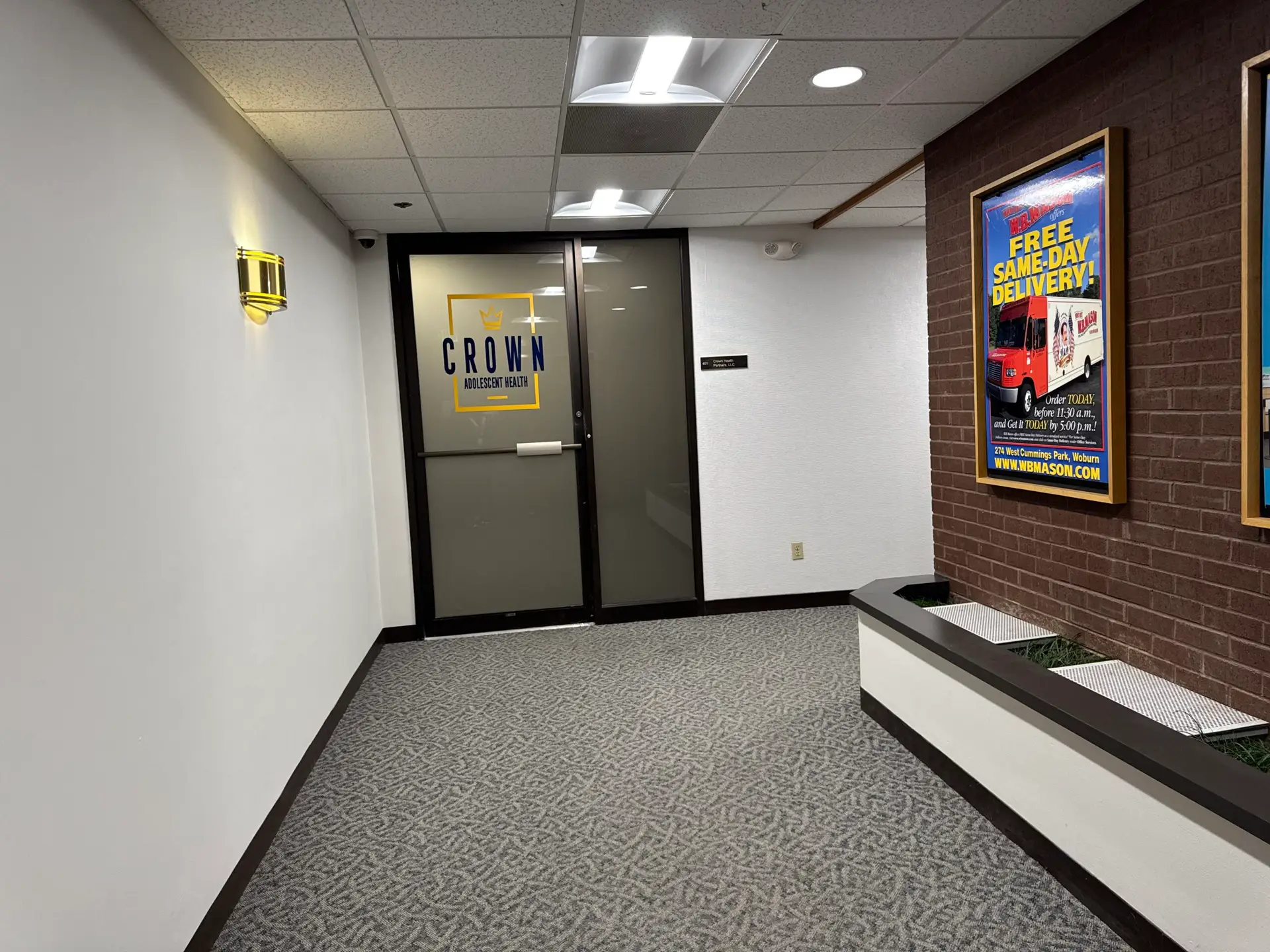
Located at 1 Technology Park Drive, Unit 1A, Bourne, MA 02532, Crown Adolescent Health serves families from Bourne, Sandwich, Falmouth, Mashpee, Barnstable, Hyannis, Wareham, Buzzards Bay, Plymouth, and communities throughout Cape Cod and southeastern Massachusetts.
What Is Obsessive-Compulsive Disorder?
Obsessive-compulsive disorder, commonly called OCD, is a mental health condition involving recurring unwanted thoughts, images, impulses, or fears known as obsessions. These experiences can create intense distress and lead a person to perform repetitive behaviors or mental rituals known as compulsions.
Compulsions are usually performed to reduce anxiety, gain certainty, or prevent something feared from happening. The relief is generally temporary. When the intrusive thought returns, the teen may feel compelled to repeat the ritual again.
This creates a difficult cycle:
- An intrusive thought, doubt, image, or fear appears.
- The teen experiences anxiety, disgust, guilt, or uncertainty.
- The teen performs a behavior or mental ritual.
- Anxiety decreases temporarily.
- The brain learns to depend on the ritual for relief.
- The obsession and compulsion return.
Without appropriate treatment, the cycle can become increasingly time-consuming and disruptive.
Common Obsessions in Teenagers
Obsessions are unwanted and recurring thoughts, fears, images, sensations, or doubts. They are not simply ordinary worries. They may feel intrusive, disturbing, or inconsistent with the teenager’s actual beliefs and values.
Common obsessive themes may include:
- Fear of germs, illness, or contamination
- Fear of accidentally harming someone
- Fear that something terrible will happen to family members
- Excessive concern about making a mistake
- Fear of losing control
- Disturbing unwanted thoughts or mental images
- Concern about morality, guilt, or doing something wrong
- Need for symmetry, order, or exactness
- Fear of throwing away something important
- Persistent doubt about whether a task was completed
- Need to remember or understand something perfectly
- Fear that thoughts could somehow cause an event
Having an intrusive thought does not mean a teenager wants to act on it. Teens with OCD are often deeply distressed precisely because the thought feels inconsistent with who they are.
Common Compulsions in Adolescents
Compulsions are repetitive behaviors or mental acts performed to reduce distress, prevent a feared outcome, or create a temporary sense of certainty.
Common compulsions may include:
- Excessive handwashing or showering
- Repeatedly checking doors, appliances, assignments, or belongings
- Repeating words, phrases, questions, or actions
- Counting objects or actions
- Arranging objects until they feel correct
- Seeking reassurance from parents or teachers
- Confessing thoughts or perceived mistakes repeatedly
- Restarting homework or routines
- Avoiding objects, people, places, or situations
- Mentally reviewing conversations or events
- Silently repeating prayers or neutralizing phrases
- Performing activities according to strict rules
Some compulsions are visible, while others happen entirely in the teenager’s mind. Mental rituals can be difficult for parents and teachers to recognize.
Are OCD Symptoms Controlling Your Teen’s Routine?
Our admissions team can help your family discuss current symptoms, review available treatment options, and determine whether Crown Adolescent Health may be an appropriate fit.
Speak With Our Admissions TeamOCD Is More Than Being Organized or Particular
The term OCD is sometimes used casually to describe someone who likes cleanliness, organization, or predictable routines. Clinical obsessive-compulsive disorder is different.
A teen with OCD is not performing rituals because they enjoy them. The behaviors are usually driven by anxiety, uncertainty, fear, guilt, or a feeling that something is incomplete. The teenager may desperately want to stop but feel unable to tolerate the distress that appears when they resist.
Symptoms may consume significant time and interfere with everyday functioning. Recognizing this difference can help families respond with greater understanding and seek appropriate professional support.
Signs Your Teen May Need an OCD Assessment
Teenagers frequently hide OCD symptoms because they feel embarrassed, ashamed, or afraid that others will misunderstand them. Parents may initially notice only the delays, arguments, avoidance, or rigid routines caused by the condition.
Possible warning signs include:
- Taking an unusually long time to shower or get ready
- Repeatedly checking completed homework
- Asking the same reassurance question many times
- Becoming distressed when belongings are moved
- Avoiding certain rooms, objects, foods, or people
- Repeating ordinary actions until they feel right
- Frequent lateness caused by rituals
- Difficulty leaving home
- Extreme distress about small mistakes
- Declining school performance
- Increasing family conflict around routines
- Unexplained exhaustion or sleep loss
- Red, irritated, or damaged skin from washing
- Spending excessive time reviewing conversations
- Repeatedly confessing harmless thoughts or actions
A comprehensive evaluation can help distinguish OCD from generalized anxiety, perfectionism, autism-related routines, depression, trauma-related symptoms, or other concerns that may look similar.
How OCD Can Affect School
OCD can interfere substantially with academic performance even when a teenager is intelligent, motivated, and capable of completing the work.
A student may repeatedly erase answers, reread assignments, rewrite paragraphs, check calculations, organize supplies, or restart tasks because the work does not feel correct. Homework that should take one hour may consume an entire evening.
OCD-related school difficulties may include:
- Arriving late because of morning rituals
- Missing deadlines
- Taking excessive time on tests
- Avoiding shared supplies or bathrooms
- Seeking repeated reassurance from teachers
- Difficulty concentrating because of intrusive thoughts
- Refusing to submit work unless it feels perfect
- Frequent nurse visits
- School refusal
- Emotional exhaustion after the school day
When attendance becomes difficult, families may also benefit from learning about School Refusal Treatment for Teens in Cape Cod, MA.
OCD, Perfectionism, and Reassurance-Seeking
Some adolescents with OCD repeatedly seek reassurance because they feel unable to tolerate uncertainty. They may ask whether they completed a task correctly, offended someone, touched something unsafe, or caused a problem.
Parents naturally want to comfort their teen and may answer the same question repeatedly. Unfortunately, reassurance can sometimes become part of the compulsive cycle. It reduces anxiety briefly but teaches the teen to depend on someone else to feel certain.
Treatment can help families respond with compassion while gradually reducing patterns that unintentionally maintain symptoms.
OCD and Family Accommodation
Family accommodation occurs when relatives change routines or participate in rituals to reduce the teenager’s immediate distress.
Examples may include:
- Answering the same reassurance question repeatedly
- Opening doors or touching objects for the teen
- Changing laundry or cleaning routines
- Avoiding certain words, foods, people, or places
- Checking items on the teen’s behalf
- Allowing rituals to determine the family schedule
- Completing assignments or responsibilities for the teen
Parents usually accommodate OCD because they care and want to prevent suffering. Treatment can help families reduce accommodation gradually without blaming or overwhelming the adolescent.
OCD and Other Mental Health Conditions
OCD can occur alongside anxiety, depression, panic attacks, ADHD, trauma-related symptoms, sleep problems, and emotional dysregulation.
A teen who spends hours managing obsessions and compulsions may become exhausted, discouraged, isolated, or unable to keep up with school. Embarrassment about symptoms can also contribute to low self-esteem and depression.
An individualized assessment helps identify overlapping concerns so the treatment plan addresses the adolescent’s complete needs.
Related resources include Teen Anxiety Treatment in Cape Cod, MA and Teen Depression Treatment in Cape Cod, MA.
Evidence-Based Treatment for Teen OCD
OCD requires a thoughtful treatment plan based on the teen’s symptoms, severity, functioning, developmental needs, and previous treatment history.
Cognitive Behavioral Therapy is commonly used in adolescent OCD treatment. A specialized form of CBT known as Exposure and Response Prevention, or ERP, is widely recognized as an important evidence-based approach for obsessive-compulsive symptoms.
When clinically appropriate and delivered by a qualified professional, ERP helps a teen gradually face an anxiety trigger while practicing the decision not to complete the usual compulsion. Exposure exercises are planned collaboratively and introduced gradually rather than forcing the adolescent into an overwhelming situation.
Families should ask whether a prospective clinician has specific training and experience in evaluating and treating pediatric OCD. Crown Adolescent Health’s admissions and clinical teams can help families discuss symptoms, treatment needs, program fit, and appropriate referrals or coordination when necessary.
How Exposure and Response Prevention Works
ERP is based on the understanding that compulsions provide temporary relief while strengthening the OCD cycle over time.
During treatment, the teen and clinician may develop a personalized list of feared situations and compulsive behaviors. They begin with manageable exercises and gradually work toward more difficult challenges.
A simplified example may involve:
- Identifying a specific OCD trigger
- Rating the expected anxiety
- Approaching the trigger gradually
- Resisting or delaying the usual compulsion
- Remaining in the situation long enough to learn that anxiety can change without completing the ritual
- Reviewing what the teen learned
- Practicing the skill consistently
The objective is not to prove that every feared event is impossible. The teen learns that uncertainty can be tolerated and that compulsions are not required to move forward.
Cognitive Behavioral Therapy
CBT helps teens understand how interpretations, emotions, and behavior affect one another. An adolescent may learn to identify exaggerated responsibility, all-or-nothing thinking, catastrophic predictions, or the belief that having a thought makes an event more likely.
Treatment helps the teenager respond to intrusive thoughts with greater flexibility rather than debating every thought or seeking complete certainty.
Individual Therapy
Individual therapy provides private time for adolescents to discuss intrusive thoughts, compulsions, shame, avoidance, school difficulties, family stress, and recovery goals.
Because some OCD themes are deeply personal or embarrassing, a respectful therapeutic relationship is essential. Teens need to understand that intrusive thoughts do not define their character or intentions.
Group Therapy and Skills Development
Group therapy may support broader concerns such as anxiety management, emotional regulation, communication, stress tolerance, and social confidence.
A therapeutic group can help adolescents feel less isolated and practice skills alongside peers. However, OCD-specific interventions should be individualized according to the teen’s symptoms and treatment plan.
Family Therapy and Parent Support
Parents and caregivers often play an important role in adolescent OCD treatment. Family involvement can help caregivers understand the disorder, recognize accommodation, communicate more effectively, and support treatment exercises without becoming part of the ritual.
Family-focused treatment may address:
- Understanding obsessions and compulsions
- Responding to reassurance-seeking
- Reducing family accommodation gradually
- Managing conflict around rituals
- Supporting treatment practice at home
- Creating predictable routines
- Encouraging age-appropriate independence
- Recognizing worsening symptoms
The goal is not to criticize families for previous responses. Parents usually act from love and concern. Treatment provides new strategies that support longer-term recovery.
When Weekly Therapy May Not Be Enough
Some teenagers can receive effective OCD care through regular outpatient appointments. Others may need more structure because symptoms consume substantial time or occur alongside additional mental health challenges.
A higher level of care may be considered when symptoms:
- Take up significant portions of the day
- Cause repeated school absences
- Prevent completion of basic routines
- Continue despite outpatient treatment
- Create severe family disruption
- Lead to extensive avoidance or isolation
- Occur alongside significant anxiety or depression
- Make independent functioning difficult
- Require frequent opportunities to practice coping skills
The appropriate program depends on the teen’s complete clinical picture. Not every general mental health program provides specialized ERP, so treatment fit should be discussed carefully during the assessment and admissions process.
Adolescent Intensive Outpatient Program in Cape Cod
An adolescent Intensive Outpatient Program provides more structure than traditional weekly therapy while allowing teens to continue living at home.
IOP may include group therapy, individual support, family involvement, emotional regulation training, and coping-skill development several times per week.
For a teen with OCD and overlapping anxiety, depression, school refusal, or emotional dysregulation, IOP may support broader stabilization and daily functioning. The clinical team should determine whether additional OCD-specific treatment is also required.
Learn more about our Cape Cod IOP Program for Teens.
Teen Partial Hospitalization Program in Cape Cod
A Partial Hospitalization Program provides intensive daytime treatment for adolescents whose symptoms significantly interfere with school, relationships, family routines, or daily functioning.
Teens participate in structured clinical programming during the day and return home afterward. PHP may be appropriate when OCD occurs alongside severe anxiety, depression, emotional instability, school refusal, or a recent mental health crisis.
Learn more about our Cape Cod Partial Hospitalization Program for Teens.
Teen OCD Treatment at Our Cape Cod Unit
Families throughout Cape Cod can contact Crown Adolescent Health’s Bourne location to discuss adolescent OCD symptoms, overlapping mental health concerns, treatment options, and program eligibility.
Crown Adolescent Health
1 Technology Park Drive, Unit 1A
Bourne, MA 02532
Our location makes adolescent-focused mental health support accessible to families from Bourne, Sandwich, Falmouth, Mashpee, Barnstable, Hyannis, Wareham, Buzzards Bay, Plymouth, and other nearby Massachusetts communities.
Because OCD symptoms and treatment needs vary, the admissions process is an opportunity to determine whether Crown’s available programming is appropriate and whether specialized outside coordination may be recommended.
Why Cape Cod Families Contact Crown Adolescent Health
Families contact Crown Adolescent Health because our programs are designed around the emotional, developmental, academic, and family needs of teenagers.
Our approach emphasizes:
- Adolescent-focused mental health care
- Individualized clinical assessment
- Evidence-based treatment planning
- Individual, group, and family support
- Multiple levels of care
- Emotional regulation and coping skills
- Family participation and parent education
- Support for school and daily functioning
- Coordination or referral when specialized services are needed
- Thoughtful discharge and continuing-care planning
Insurance Verification and Admissions
Insurance coverage for adolescent OCD and mental health treatment depends on the specific policy, behavioral health benefits, deductible, authorization requirements, medical necessity, and recommended level of care.
Our admissions team can verify available benefits, discuss current symptoms, explain the admissions process, and review potential treatment options. Insurance verification does not guarantee payment, but it can help families better understand possible coverage before services begin.
Parents do not need to know which level of care their teenager requires before calling. A professional assessment can help clarify appropriate next steps.
Frequently Asked Questions
What is the difference between an obsession and a compulsion?
An obsession is an unwanted recurring thought, image, fear, sensation, or doubt. A compulsion is a repetitive behavior or mental ritual performed to reduce the distress associated with the obsession or prevent a feared outcome.
Is OCD the same as being neat or organized?
No. OCD involves distressing obsessions and compulsions that can consume time and interfere with daily functioning. Enjoying cleanliness or organization does not automatically indicate obsessive-compulsive disorder.
Can teenagers hide OCD symptoms?
Yes. Teens may hide symptoms because they feel embarrassed or fear being misunderstood. Parents may first notice delays, avoidance, reassurance-seeking, rigid routines, declining grades, or increased family conflict.
Can parents accidentally reinforce compulsions?
Parents may unintentionally participate in rituals or provide repeated reassurance because they want to reduce distress. Family-supported treatment can help caregivers respond compassionately while reducing accommodation gradually.
What therapy is commonly used for OCD?
Cognitive Behavioral Therapy with Exposure and Response Prevention is widely recognized as an evidence-based treatment approach for OCD. Families should ask whether the treating clinician has specific experience and training in pediatric OCD and ERP.
Does every teen with OCD need IOP or PHP?
No. Many adolescents can receive care through outpatient treatment. IOP or PHP may be considered when symptoms significantly interfere with school, home routines, relationships, or daily functioning, or when other serious mental health concerns occur at the same time.
Does insurance cover teen OCD treatment?
Many insurance plans include behavioral health benefits, but coverage varies. The admissions team can verify available benefits and explain information associated with the family’s specific plan.
What should I do if my teen is in immediate danger?
A scheduled treatment program is not a substitute for emergency care. If your teenager has made a suicide attempt, has a specific plan to harm themselves or another person, or cannot remain safe, call 911 or go to the nearest emergency department. In the United States, you may also call or text 988 for immediate crisis support.
Related Teen Mental Health Services
- Teen Anxiety Treatment in Cape Cod, MA
- Teen Depression Treatment in Cape Cod, MA
- Cape Cod IOP Program for Teens
- Cape Cod Partial Hospitalization Program for Teens
- Teen Therapy in Cape Cod, MA
- School Refusal Treatment for Teens in Cape Cod, MA
- Teen Panic Attack Treatment in Cape Cod, MA
- Teen Mental Health Treatment Center in Cape Cod, MA
Additional OCD Resources
Families can learn more about obsessive-compulsive disorder through the National Institute of Mental Health and the American Academy of Child and Adolescent Psychiatry.
Find Teen OCD Support in Cape Cod
If intrusive thoughts, compulsions, reassurance-seeking, avoidance, anxiety, or school difficulties are affecting your teenager’s life, Crown Adolescent Health can help your family discuss possible next steps.
Crown Adolescent Health
1 Technology Park Drive, Unit 1A
Bourne, MA 02532
Call (781) 412-1098 Today