Teen Anxiety Treatment in Plymouth, MA
Crown Adolescent Health provides specialized anxiety treatment near Plymouth for teenagers struggling with constant worry, panic attacks, school avoidance, perfectionism, social fears, and emotional overwhelm.
If you are searching for teen anxiety treatment in Plymouth, MA, your family may be watching a teenager struggle with worry, fear, overthinking, physical tension, panic symptoms, or avoidance. Your teen may appear successful on the outside while privately feeling overwhelmed by school, friendships, expectations, and uncertainty about the future.
Anxiety can affect nearly every area of an adolescent’s life. It may interfere with sleep, concentration, academic performance, relationships, sports, social activities, family communication, and confidence. Some teens become visibly distressed, while others hide their symptoms until anxiety begins causing school refusal, emotional shutdowns, panic attacks, or physical complaints.
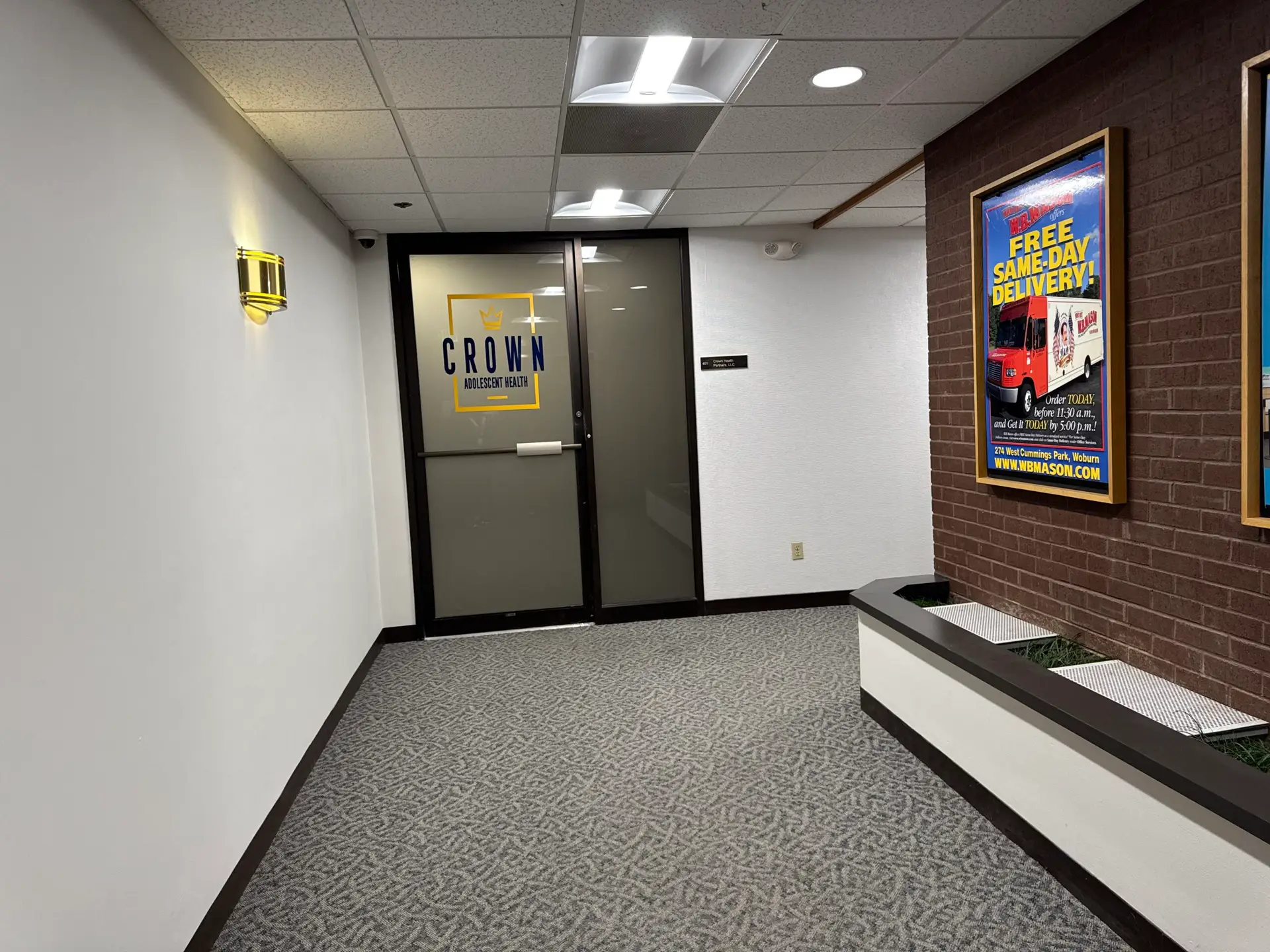
Crown Adolescent Health provides adolescent-focused mental health treatment near Plymouth through our Bourne location. Our programs help teenagers understand anxiety, recognize triggers, reduce avoidance, improve emotional regulation, and develop practical coping strategies.
A clinical assessment can help determine the right level of teen anxiety treatment for your teen.
Located at 1 Technology Park Drive, Unit 1A, Bourne, MA 02532, Crown Adolescent Health serves families from Plymouth, Bourne, Sandwich, Wareham, Kingston, Carver, Mashpee, Falmouth, Barnstable, and communities throughout southeastern Massachusetts and Cape Cod.
Understanding Anxiety in Teenagers
Anxiety is the body’s natural response to stress or perceived danger. In appropriate situations, anxiety can help a teenager prepare for an exam, respond to a challenge, or remain alert in an unfamiliar environment.
Anxiety becomes a concern when fear or worry is excessive, persistent, difficult to control, or disconnected from the actual level of danger. A teen may understand logically that a situation is safe while still feeling physically and emotionally overwhelmed.
Adolescent anxiety can affect thoughts, emotions, behavior, and physical functioning. It may cause a teen to avoid situations, seek constant reassurance, become irritable, withdraw socially, or spend significant time anticipating what could go wrong.
Signs Your Teen May Be Struggling With Anxiety
Anxiety does not look the same for every teenager. Some teens openly express fear, while others become quiet, angry, perfectionistic, or avoidant.
Common signs may include:
- Constant worry or overthinking
- Fear of making mistakes
- Perfectionism
- Difficulty sleeping
- Frequent headaches or stomachaches
- Rapid heartbeat or shortness of breath
- Difficulty concentrating
- Irritability or emotional outbursts
- Social withdrawal
- Repeated requests for reassurance
- Avoidance of unfamiliar situations
- Fear of school, tests, or presentations
- Panic attacks
- School refusal or frequent absences
- Difficulty relaxing
A teenager does not need to experience every symptom to benefit from treatment. Persistent anxiety that interferes with daily life deserves professional attention.
Is Anxiety Limiting Your Teen’s Life?
Early treatment can help reduce avoidance, improve confidence, and give your teenager practical tools for managing anxiety at home, at school, and in social situations.
Speak With Our Admissions TeamWhy Teenagers Develop Anxiety
Teen anxiety rarely develops because of one single factor. It may result from a combination of temperament, family history, academic pressure, social experiences, stress, and developmental changes.
Factors that may contribute include:
- Family history of anxiety or other mental health conditions
- Academic competition
- Fear of failure
- Perfectionism
- Bullying or peer rejection
- Social media comparison
- Family conflict
- Major life transitions
- Trauma or distressing experiences
- Learning challenges
- Low self-esteem
- Sleep deprivation
- Pressure related to sports or extracurricular activities
- Uncertainty about college or the future
Understanding the factors contributing to anxiety helps clinicians create an individualized treatment plan that addresses the teenager’s specific needs and circumstances.
Generalized Anxiety in Adolescents
Generalized anxiety involves excessive worry across several areas of life. A teenager may worry about grades, health, family safety, friendships, sports, future plans, or situations that have not happened.
The teen may recognize that the worry is excessive but still feel unable to stop it. Constant mental tension can lead to fatigue, irritability, difficulty concentrating, muscle tension, and sleep problems.
This structured approach is one of several teen anxiety treatment options available to families in our area.
Treatment helps adolescents recognize worry patterns, question catastrophic predictions, tolerate uncertainty, and develop healthier ways of managing stress.
Social Anxiety in Teenagers
Social anxiety involves an intense fear of judgment, rejection, embarrassment, or criticism. Teens may avoid speaking in class, attending social events, eating in front of others, joining activities, meeting unfamiliar people, or asking for help.
Some socially anxious teens are mistaken for being shy, uninterested, or unmotivated. In reality, they may desperately want connection but feel overwhelmed by fear.
Treatment helps adolescents challenge negative assumptions, practice communication skills, and gradually participate in situations they have been avoiding.
Panic Attacks and Physical Anxiety Symptoms
Panic attacks can cause rapid heartbeat, chest tightness, shortness of breath, dizziness, shaking, nausea, numbness, and an intense fear that something terrible is happening.
These physical symptoms can be frightening and may lead a teenager to avoid school, sports, public places, social events, or situations where they fear another episode could occur.
Treatment helps teens understand the body’s stress response, reduce fear of physical sensations, use grounding strategies, and regain confidence.
Learn more about Teen Panic Attack Treatment in Plymouth, MA.
Teen Anxiety and School Performance
School is one of the most common sources of anxiety for adolescents. Academic pressure, tests, presentations, social interactions, crowded hallways, sports, and fear of disappointing others can all contribute to distress.
An anxious teen may:
- Spend excessive time on assignments
- Avoid turning in work unless it feels perfect
- Experience panic before tests
- Refuse to give presentations
- Visit the school nurse frequently
- Ask to leave school early
- Miss classes or entire school days
- Struggle to concentrate
- Fall behind because of avoidance
Anxiety may create a cycle in which avoidance provides temporary relief but makes returning to school more difficult.
Families dealing with attendance concerns may also benefit from our page about School Refusal Treatment for Teens in Plymouth, MA.
Perfectionism and Fear of Failure
Many anxious teenagers believe they must perform perfectly in school, sports, relationships, or other areas of life. Even successful teens may feel that one mistake will disappoint others or damage their future.
Family participation is a core component of comprehensive teen anxiety treatment at Crown Adolescent Health.
Perfectionism can lead to procrastination, excessive studying, avoidance, emotional burnout, and intense reactions to criticism or disappointing results.
Treatment helps teens create more realistic expectations, separate self-worth from achievement, tolerate mistakes, and approach challenges with greater flexibility.
Anxiety and Depression
Anxiety and depression frequently occur together. A teenager who feels constantly worried and overwhelmed may eventually become exhausted, discouraged, withdrawn, or hopeless.
Teens experiencing both conditions may struggle with low motivation, sleep problems, school avoidance, irritability, social withdrawal, and difficulty enjoying activities.
Treating anxiety and depression together can help adolescents achieve more stable and lasting progress.
Learn more about Teen Depression Treatment in Plymouth, MA.
How Anxiety Affects Families
Teen anxiety can influence the entire household. Parents may provide repeated reassurance, change family plans, allow avoidance, or take over responsibilities because they want to reduce the teen’s distress.
These responses are understandable, but they can sometimes reinforce the belief that anxiety is dangerous or that the teen cannot manage difficult situations.
Family involvement helps parents validate emotions while encouraging healthy coping, independence, and gradual participation in avoided activities.
How Teen Anxiety Treatment Helps
Treatment helps teenagers understand anxiety, identify triggers, recognize unhelpful patterns, and practice practical coping strategies.
Therapy may help adolescents:
- Recognize early anxiety symptoms
- Challenge catastrophic thinking
- Reduce avoidance
- Manage physical fear symptoms
- Improve emotional regulation
- Develop healthier sleep routines
- Build social confidence
- Manage school stress
- Communicate concerns more clearly
- Tolerate uncertainty
- Respond more flexibly to mistakes
- Regain independence
The goal is not to eliminate every feeling of anxiety. Treatment helps teens develop the confidence and skills to move forward even when discomfort is present.
Cognitive Behavioral Therapy for Teen Anxiety
Cognitive Behavioral Therapy, commonly called CBT, is frequently used to treat adolescent anxiety. CBT helps teens understand how thoughts, emotions, physical sensations, and behavior influence one another.
Addressing these struggles is often a key focus of effective teen anxiety treatment.
A teen may believe that one poor grade will ruin their future or that speaking in class will lead to humiliation. These predictions increase anxiety and often lead to avoidance.
CBT helps adolescents identify these thought patterns, evaluate the evidence, and develop more balanced responses. It also supports gradual participation in situations the teen has been avoiding.
Dialectical Behavior Therapy Skills
Dialectical Behavior Therapy, or DBT, teaches skills for managing intense emotions and stressful situations.
DBT-informed treatment may focus on:
- Mindfulness
- Emotional regulation
- Distress tolerance
- Interpersonal effectiveness
These skills can help anxious teens remain present, manage physical distress, communicate needs, and avoid reacting impulsively during overwhelming moments.
Individual Therapy
Individual therapy gives teenagers private time with a clinician to discuss fears, school concerns, relationships, family stress, physical anxiety symptoms, and treatment goals.
Sessions may focus on identifying triggers, challenging fearful thinking, practicing coping techniques, and creating a gradual plan for returning to avoided activities.
Group Therapy
Group therapy gives adolescents a structured environment where they can connect with peers facing similar challenges. Many anxious teenagers feel isolated or believe that nobody else understands what they are experiencing.
Group therapy may help teens:
- Reduce shame and isolation
- Practice communication skills
- Build social confidence
- Learn from peer experiences
- Practice coping techniques
- Tolerate discomfort in a supportive setting
- Develop healthier relationships
Family Therapy and Parent Support
Parents play an important role in adolescent anxiety treatment. Family sessions can help caregivers understand symptoms, respond calmly, reduce conflict, and support healthy independence.
Family-focused treatment may address:
- How to respond to reassurance-seeking
- Supporting gradual reduction of avoidance
- Communication during anxious moments
- Healthy household expectations
- School attendance and routines
- Parent stress and frustration
- Supporting coping skills at home
- Recognizing warning signs
Family involvement does not blame parents for anxiety. It helps the entire household develop more effective patterns of support.
When Weekly Therapy May Not Be Enough
Weekly outpatient therapy can be effective for many teenagers. Some adolescents, however, need more frequent treatment and greater structure.
Because every teenager is different, an individualized teen anxiety treatment plan is essential for lasting progress.
A higher level of care may be appropriate when anxiety:
- Causes frequent school absences
- Leads to severe avoidance
- Continues despite outpatient therapy
- Triggers repeated panic attacks
- Occurs alongside depression
- Interferes with ordinary responsibilities
- Creates significant family conflict
- Prevents participation in daily activities
Adolescent Intensive Outpatient Program Near Plymouth
An adolescent Intensive Outpatient Program provides structured treatment several days per week while allowing teenagers to continue living at home.
IOP may include individual therapy, group therapy, family support, anxiety education, emotional regulation training, and gradual work to reduce avoidance.
This level of care may be appropriate for teens who need more support than weekly counseling but do not require full-day treatment.
Learn more about our Adolescent IOP Program in Plymouth, MA.
Teen Partial Hospitalization Program Near Plymouth
A Partial Hospitalization Program provides intensive daytime treatment for adolescents whose anxiety significantly interferes with school, family life, relationships, or daily functioning.
Teens attend structured treatment during the day and return home afterward. PHP may be appropriate when anxiety, panic attacks, depression, emotional dysregulation, or school refusal require closer clinical support.
Learn more about our Teen PHP Program in Plymouth, MA.
Teen Anxiety Treatment Near Plymouth
Families from Plymouth can access adolescent-focused mental health treatment at Crown Adolescent Health’s Bourne location:
Crown Adolescent Health
1 Technology Park Drive, Unit 1A
Bourne, MA 02532
Our location offers a specialized adolescent treatment option for families from Plymouth and nearby communities. Receiving care within the region can make consistent attendance and parent participation more manageable.
We serve families from Plymouth, Kingston, Carver, Wareham, Bourne, Sandwich, Mashpee, Falmouth, Barnstable, and other communities throughout southeastern Massachusetts and Cape Cod.
Why Plymouth Families Choose Crown Adolescent Health
Families choose Crown Adolescent Health because our programs are designed specifically for teenagers. We understand how anxiety affects school, friendships, family relationships, independence, confidence, and future goals.
Recognizing these signs early and pursuing teen anxiety treatment promptly can make a meaningful difference in recovery.
Our approach emphasizes:
- Adolescent-focused mental health care
- Individualized treatment planning
- Evidence-based therapeutic approaches
- CBT- and DBT-informed skills
- Individual, group, and family therapy
- Multiple levels of care
- Support for reducing avoidance
- Family participation and parent education
- Support for school and daily functioning
- Thoughtful transition and aftercare planning
Insurance Verification and Admissions
Insurance coverage for teen anxiety treatment depends on the provider, specific policy, behavioral health benefits, deductible, authorization requirements, medical necessity, and recommended level of care.
Our admissions team can verify available benefits, explain the admissions process, and discuss possible treatment options. Insurance verification does not guarantee payment, but it can help families better understand potential coverage before treatment begins.
Parents do not need to determine whether outpatient therapy, IOP, or PHP is appropriate before calling. A professional assessment can help identify the right next step.
Frequently Asked Questions
How do I know whether my teen’s anxiety requires treatment?
Professional support may be appropriate when anxiety persists, interferes with school or relationships, causes avoidance, produces panic symptoms, or prevents the teen from completing everyday responsibilities.
Can teen anxiety improve with therapy?
Yes. Therapy can help adolescents understand anxiety, challenge fearful thinking, manage physical symptoms, reduce avoidance, and build confidence in difficult situations.
What if my teen refuses treatment?
Resistance is common. Teens may feel embarrassed, misunderstood, or worried about being judged. Parents can explain concerns calmly, listen without arguing, and speak with an admissions professional about how to introduce treatment.
Will parents participate in treatment?
Family involvement is often an important part of adolescent care. Parents may participate in family sessions, treatment planning, education, and guidance for supporting coping skills at home.
Does my teen need IOP or PHP?
The appropriate level of care depends on symptom severity, school attendance, avoidance, daily functioning, family stability, safety, and response to previous therapy. A clinical assessment can provide guidance.
Does insurance cover teen anxiety treatment?
Many plans include behavioral health benefits, but coverage varies. The admissions team can verify benefits and explain available information based on the family’s specific policy.
What should I do if my teen is in immediate danger?
A scheduled treatment program is not a substitute for emergency care. If your teenager has made a suicide attempt, has a specific plan to harm themselves or another person, or cannot remain safe, call 911 or go to the nearest emergency department. In the United States, you may also call or text 988 for immediate crisis support.
For additional information about adolescent mental health, families may also review resources from the National Institute of Mental Health while exploring teen anxiety treatment options with our clinical team.
Related Teen Mental Health Services
- Teen Depression Treatment in Plymouth, MA
- Teen Panic Attack Treatment in Plymouth, MA
- Teen Emotional Dysregulation Treatment in Plymouth, MA
- Adolescent IOP Program in Plymouth, MA
- Teen PHP Program in Plymouth, MA
- Teen Therapy Program in Plymouth, MA
- Teen Mental Health Treatment Center in Plymouth, MA
- School Refusal Treatment for Teens in Plymouth, MA
- Adolescent Mental Health Program in Plymouth, MA
Help Your Teen Move Beyond Anxiety
If constant worry, panic attacks, school avoidance, perfectionism, or emotional distress are limiting your teenager’s life, Crown Adolescent Health can help your family understand the next step.
Crown Adolescent Health
1 Technology Park Drive, Unit 1A
Bourne, MA 02532
Call (781) 412-1098 Today